Motorhome Payload & Weight Guide: MTPLM, 3,500kg Rules and What You Can Legally Carry
10 minutes well spent
In this article
- Motorhome weights explained: MTPLM, MAM, MIRO and payload
- The 3,500kg motorhome rule and driving licences
- Under 3,500kg vs over 3,500kg: what changes?
- How to calculate your motorhome's real-world payload
- Your motorhome axle weights matter too
- Where can I weigh my motorhome?
- Common motorhome payload mistakes
- Do payload limits vary by motorhome type?
- Is a 3,500kg motorhome enough for you?
- What happens if a motorhome is overweight?
- Can you increase a motorhome's payload?
- Do the same rules apply to campervans?
- How Don Amott can help you choose
- Key takeaways
- Frequently asked questions
Choosing the right motorhome is not only about layout, berths or storage. You also need to know its legal weight, what your licence allows and how much capacity remains for people and equipment.
This guide explains motorhome weight limits, MTPLM, MIRO and axle limits in plain English. It covers Great Britain’s 3,500kg motorhome licence rules, real-world calculations and weighbridge checks. Always use the figures recorded for your vehicle and check current official guidance.
Motorhome weight limits explained: MTPLM, MAM, MIRO and payload
| Term | Full name | What it means | Why it matters |
| MTPLM | Maximum Technically Permissible Laden Mass | The maximum permitted weight of the fully loaded motorhome | The vehicle must not exceed it |
| MAM | Maximum Authorised Mass | The maximum weight of a vehicle including the load it can safely carry | GOV.UK uses this term for licence rules |
| MIRO or MRO | Mass in Running Order | The vehicle’s starting weight under the manufacturer’s stated allowances | It is used to estimate payload |
| Payload | MTPLM minus MIRO | The capacity potentially available for occupants, belongings and equipment not included in MIRO | It shows what you may be able to carry |
What does MTPLM mean on a motorhome?
MTPLM is the most your motorhome is permitted to weigh when loaded. It includes the vehicle and everything being carried in or on it. You may also see MAM, gross vehicle weight or a similar description. Although the terminology varies, the legally recorded figure for your vehicle is what matters.
Put simply: MTPLM or MAM is the maximum, MIRO is the starting figure and payload is the difference.
What is MIRO or MRO?
MIRO is not necessarily the same as an empty or unladen motorhome. This manufacturer-defined figure may include allowances for fuel, fluids, the driver, gas or water. Inclusions and manufacturing tolerances vary, so check the model’s specification, Certificate of Conformity or handbook.
Two motorhomes with the same 3,500kg MTPLM can therefore offer very different payloads.
How to read a motorhome weight plate
The weight plate is commonly found around the driver’s door, on a door pillar or under the bonnet. It records the maximum vehicle weight, gross train weight and front and rear axle limits. On a converted vehicle with more than one plate, use the final approved figures.
The 3,500kg motorhome rule and driving licences
For petrol, diesel and hybrid motorhomes in Great Britain, 3,500kg MAM is the normal Category B dividing line. This means the plated maximum, not the vehicle’s weight that day. A motorhome plated at 3,850kg cannot be driven on Category B merely because it currently weighs 3,200kg.
| Licence category | Vehicle entitlement | Relevance to motorhomes |
| B | Petrol, diesel and hybrid vehicles up to 3,500kg MAM | Covers motorhomes at or below 3,500kg |
| BE | A Category B vehicle towing a trailer | Does not permit a heavier motorhome |
| C1 | Vehicles between 3,500kg and 7,500kg MAM, with a trailer up to 750kg | Normally required for heavier motorhomes |
| C1E | A C1 vehicle with a trailer over 750kg, subject to a 12,000kg combined MAM | Relevant to heavier vehicle-and-trailer combinations |
| C | Vehicles over 3,500kg with a trailer up to 750kg | Covers larger vehicles beyond the C1 range |
GOV.UK’s driving licence categories confirm these entitlements. Always check your own licence because restrictions and individual circumstances can differ.
What if you passed your test before 1 January 1997?
Many drivers who passed before 1 January 1997 received C1 entitlement automatically and can usually drive vehicles between 3,500kg and 7,500kg MAM. Check the categories and restriction codes on your current licence rather than assuming it is present.
From age 70, a licence must be renewed every three years. If you want to retain C1, it cannot be renewed through the standard online over-70 service and must be renewed by post under the applicable requirements. Read the current DVLA guidance for drivers aged 70 or over before choosing a heavyweight motorhome.
Common misconception: B+E concerns towing a trailer. It does not raise the permitted MAM of the motorhome itself. A motorhome above 3,500kg and up to 7,500kg normally requires C1.
The 4,250kg zero-emission exception
Category B now covers qualifying electric or hydrogen zero-emission vehicles up to 4,250kg MAM in Great Britain. This does not change the normal 3,500kg limit for petrol, diesel or hybrid motorhomes. Driving licence categories differ in Northern Ireland, so check the separate rules if they apply to you.
Under 3,500kg vs over 3,500kg: what changes?
Motorhomes under 3,500kg suit drivers wanting Category B compatibility and often a more compact vehicle. A heavier model may provide more space or payload, but C1 will normally be needed up to 7,500kg. The right choice depends on your passengers, equipment and the model’s figures.
Going over 3,500kg does not automatically place a motorhome in a different speed-limit group. GOV.UK’s motorhome speed limits use a separate threshold of 3.05 tonnes maximum unladen weight. On national-speed-limit roads, a motorhome at or below that threshold may travel at up to 60mph on a single carriageway and 70mph on a dual carriageway or motorway. Above it, the limits are 50mph, 60mph and 70mph respectively. Lower posted limits always apply.
A heavier motor caravan does not automatically require a Class 7 MOT. Current GOV.UK MOT classifications list motor caravans as Class 4. Check the current tax position for the specific registration rather than relying on a broad weight assumption.
How to calculate your motorhome's real-world payload
The basic formula is:
MTPLM or MAM – MIRO = stated payload
For example:
3,500kg MTPLM – 3,050kg MIRO = 450kg stated payload
That does not necessarily leave 450kg for luggage. Depending on the MIRO definition, passengers, water and optional equipment may still need deducting. Paperwork provides a planning figure; a loaded weighbridge reading shows the real weight.
What counts towards motorhome payload?
Anything not included within MIRO consumes payload. This may include passengers, water, gas, food, clothing, pets, bikes, racks, awnings, furniture and tools. Fitted extras such as a towbar, solar equipment or additional battery still add weight.
Water is particularly easy to estimate: one litre weighs approximately one kilogram. Carrying 80 litres instead of 20 litres therefore adds roughly 60kg. Follow the manufacturer’s instructions, but consider whether you need a full tank while travelling.
Worked example: a family of four
Imagine a four-berth motorhome with a stated payload of 500kg and a driver allowance already included in MIRO. The following figures are illustrative:
| Load | Illustrative weight |
| Three additional passengers | 180kg |
| 40 litres of fresh water | 40kg |
| Four bikes and carrier | 75kg |
| Awning and fitted accessories | 45kg |
| Clothing and bedding | 45kg |
| Food, drink and kitchen items | 35kg |
| Outdoor furniture and touring equipment | 30kg |
| Total added load | 450kg |
| Estimated remaining margin | 50kg |
Actual weights will vary. The example shows why four berths or seatbelts do not guarantee a comfortable family payload. Compare the model’s payload with your real load and leave a sensible margin.
Your motorhome axle weights matter too
Being below the overall MTPLM is not enough. The front and rear axle limits shown on the plate must also be respected. It is possible for a motorhome to weigh 3,450kg against a 3,500kg MTPLM while its rear axle is overloaded.
This risk increases when heavy equipment is placed in a rear garage or on a rack behind the rear axle. The rear overhang can make an item impose more load on the rear axle than its weight alone suggests, while reducing load at the front. Bikes, e-bikes and scooters therefore need particular care.
Keep heavier items low, properly secured and distributed appropriately rather than concentrating them at the back or on one side. The sum of the two plated axle limits may be higher than the overall MTPLM, but that never gives permission to exceed the total vehicle limit. Check the total and each axle after fitting significant accessories or changing how you tour.
Where can I weigh my motorhome?
Use the official GOV.UK Find a weighbridge service to search by postcode. Many public weighbridges are privately operated, so contact the operator first to confirm the cost, opening hours, access and whether the facility can accommodate your motorhome.
For a meaningful result, load the vehicle as you would for a journey. Include the normal passengers where practical, intended fuel and water levels, gas, bikes, food, luggage and regularly carried accessories. Record those conditions alongside the reading.
Ask for separate front and rear axle weights where the facility allows it, then compare all three readings with the final vehicle plate. Reweigh after adding an awning, towbar, bike carrier, battery bank or other substantial equipment.
Common motorhome payload mistakes
New owners are often caught out by several avoidable assumptions:
- Treating 3,500kg as the available payload rather than the maximum weight of the whole loaded motorhome.
- Forgetting passengers, especially when only a nominal driver allowance is included in MIRO.
- Ignoring the combined effect of optional and aftermarket equipment.
- Carrying more water than the journey requires without accounting for its weight.
- Checking gross weight but not front and rear motorhome axle weight.
- Assuming B+E covers an overweight motorhome or one plated above 3,500kg.
- Believing berth count guarantees enough capacity for that number of travellers and their belongings.
On a used motorhome, previous owners may have fitted equipment absent from the original brochure. Inspect its current specification and use a weighbridge rather than relying solely on the published payload.
Do payload limits vary by motorhome type?
Van conversions, low-profile, coachbuilt, overcab and A-Class motorhomes can all sit at or above the 3,500kg threshold. Compact dimensions do not guarantee generous payload, while an A-Class is not automatically a heavyweight vehicle. Body style describes the design; MTPLM, MIRO, axle limits and loaded weighbridge readings determine what it can legally carry.
Is a 3,500kg motorhome enough for you?
For couples and solo travellers, fewer passenger kilograms can make a sub-3,500kg model practical, but e-bikes, pets and touring equipment still count. Families should start with every occupant, then add water, children’s equipment, food, clothing and bikes.
Extended touring may make additional payload attractive, but that must be weighed against licence requirements and the convenience of a lighter vehicle. Before buying, ask:
- What are the exact MTPLM and stated MIRO?
- What does the MIRO include?
- Which optional or aftermarket items are fitted?
- What are the front and rear axle limits?
- Does my licence cover the plated MAM?
- How many people, bikes, pets and accessories will I carry?
- Can the chassis be uprated if my needs change?
What happens if a motorhome is overweight?
An overweight motorhome can have longer braking distances, poorer stability and increased strain on its tyres, suspension and axles. Insurance implications can depend on the circumstances and policy, so check directly with your insurer rather than assuming your cover is unaffected.
At a roadside weight check, an overloaded vehicle may be prohibited from continuing until enough load is removed. Current DVSA graduated penalty guidance lists fixed penalties of £100 for less than 10% excess weight, £200 from 10% to under 15% and £300 for 15% or more; serious cases may go to court. Check the guidance again before publication because enforcement policy can change.
If a motorhome is overweight, do not continue touring as normal. Remove unnecessary items, reduce water where appropriate, redistribute the load if an axle is the issue and reweigh. Redistribution cannot solve a total-weight excess unless weight is also removed.
Can you increase a motorhome's payload?
Uprating or up-plating means increasing the vehicle’s officially permitted MAM or MTPLM. It changes the legal maximum; it does not reduce the motorhome’s actual weight or automatically strengthen its components.
Some chassis can be uprated through certification; others may need approved changes to suspension, tyres, wheels or other components. Suitability is vehicle-specific, so consult the manufacturer, a specialist and your dealer.
After an approved uprating, the vehicle plate and documentation must show the new limit, and your insurer should be informed. Moving above 3,500kg may require C1 entitlement. It does not, by itself, turn a motor caravan into a Class 7 MOT vehicle.
Do the same rules apply to campervans?
Yes. Campervans still have a MAM, payload and axle limits, and the driver needs the correct entitlement. Conversion furniture, pop-top equipment, batteries, bikes and camping kit all add weight. Use the same calculation and weighbridge checks.
How Don Amott can help you choose
The right payload depends on how you travel. Don Amott can help compare motorhomes under 3,500kg for Category B compatibility with heavier options for C1-qualified drivers, considering layout, equipment, storage and axle limits together.
Before visiting the 48-acre Hilton, Derbyshire dealership, note your travellers, bikes, pets, water and accessories. The team can then identify suitable vehicles and confirm model-specific weight information. Browse current stock or speak with an adviser to compare under-and-over-3,500kg options.
Key takeaways
- MTPLM or MAM is the maximum permitted loaded weight.
- MIRO is the manufacturer’s stated starting weight; check what it includes.
- Payload can be consumed by people, water, fitted equipment and belongings.
- Category B normally covers petrol, diesel and hybrid motorhomes up to 3,500kg MAM; C1 normally covers 3,500kg to 7,500kg.
- B+E relates to trailers, not a heavier motorhome.
- Check the total weight and both axle weights at a weighbridge.
Frequently asked questions
Can I drive a motorhome on a standard car licence?
For most petrol, diesel and hybrid motorhomes, Category B covers a vehicle with a MAM up to 3,500kg. A motorhome above 3,500kg and up to 7,500kg normally requires C1. Drivers who passed before 1 January 1997 may already hold C1, but should check their licence.
Is B+E the same as C1 for a motorhome?
No. B+E concerns a Category B vehicle towing a trailer. It does not permit you to drive a motorhome whose own MAM exceeds the Category B limit.
Does MTPLM include people, water and bikes?
MTPLM is the maximum total permitted weight. People, water, bikes, luggage and accessories contribute to the actual weight, although some allowances may already be included in MIRO. Check the manufacturer’s definition.
Can I be below MTPLM but still overloaded?
Yes. You can remain below the overall MTPLM while exceeding a front or rear axle limit. This is why separate axle readings are important.
Can I upgrade the payload after purchase?
Possibly. Some motorhomes can be formally uprated through certification or approved mechanical changes. It depends on the chassis and specification, and moving above 3,500kg may require C1 entitlement.

We’ve got 100s of new and used stock for you to discover
The ultimate home of motorhomes, campervans & caravans sales in Derbyshire.
-
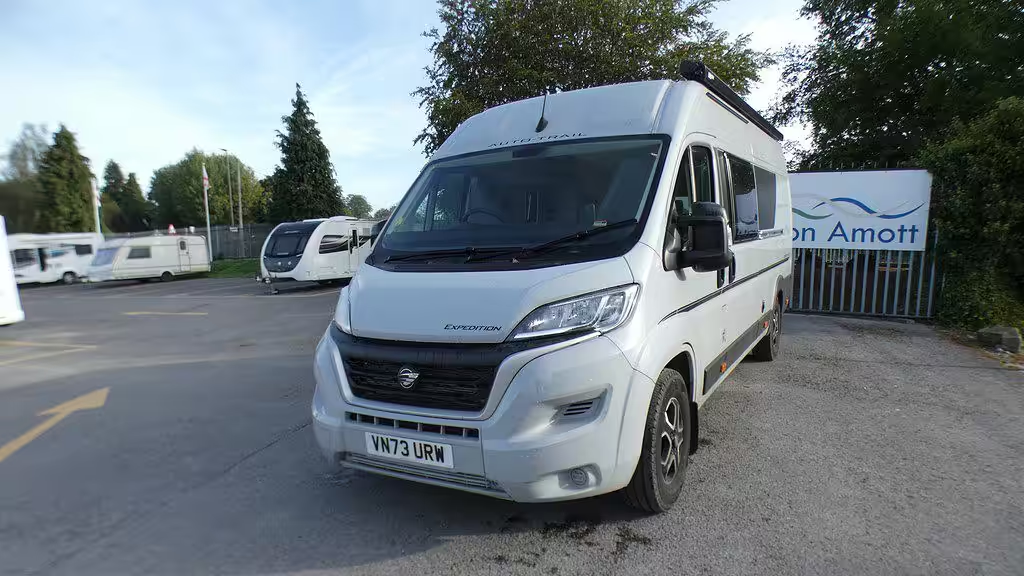
- Awaiting Preparation
- Used
- 2023
- 2 Berth
- Van Conversion
- 11,705 Miles
- End Bedroom
- Fixed Double Bed
- Automatic
Don Amott, Derbyshire£53,995£558 per month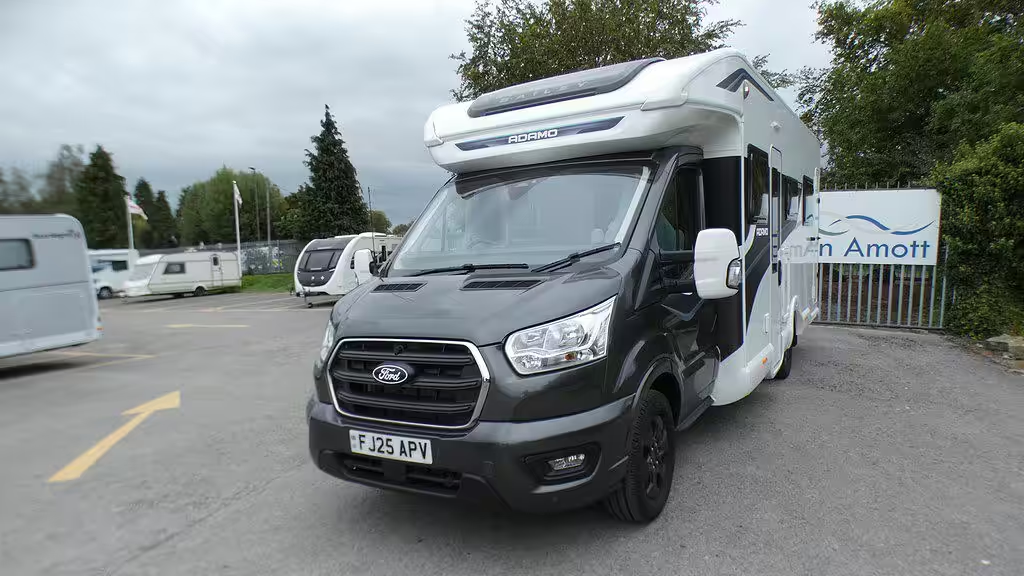
- Awaiting Preparation
- Used
- 2025
- 4 Berth
- Coachbuilt
- 2,226 Miles
- End Lounge
- Drop-down Bed
- Automatic
Don Amott, Derbyshire£66,995£692 per month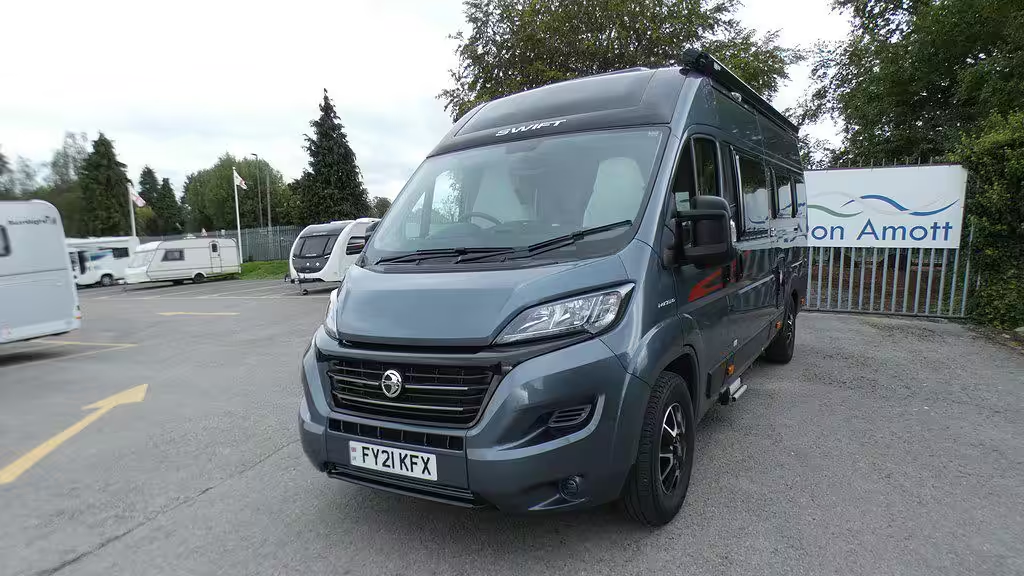
- Awaiting Preparation
- Used
- 2021
- 4 Berth
- Van Conversion
- 12,229 Miles
- End Lounge
- Manual
Don Amott, Derbyshire£53,995£558 per month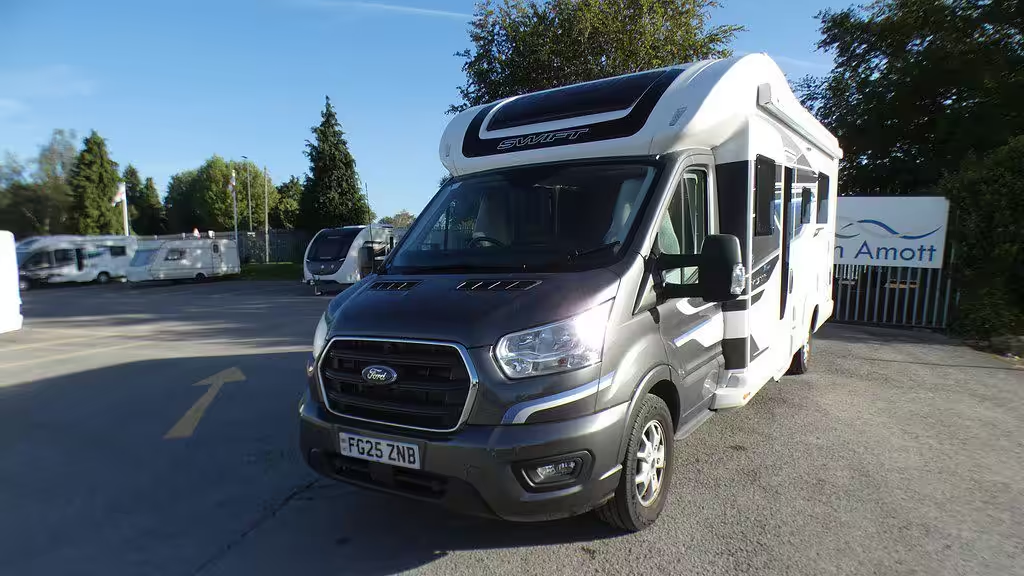
- Awaiting Preparation
- Used
- 2025
- 6 Berth
- Coachbuilt
- 3,924 Miles
- End Lounge
- Automatic
Don Amott, Derbyshire£63,995£661 per month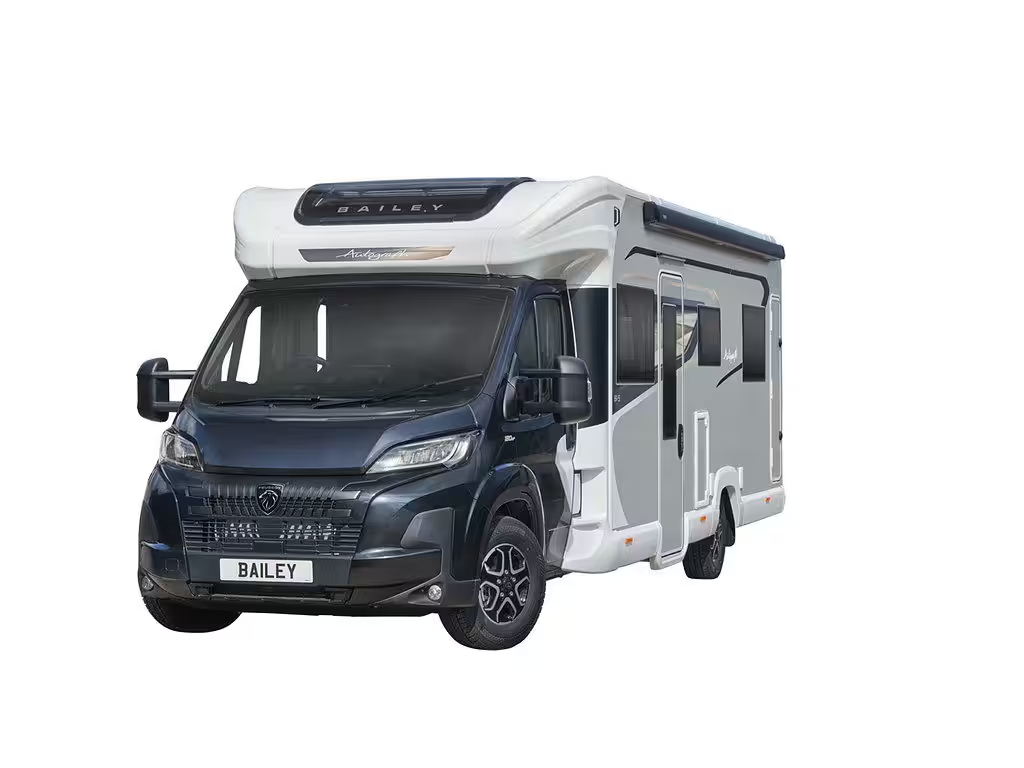
- Available To Order
- New
- 2027
- 6 Berth
- Coachbuilt
- End Lounge
- Drop-down Bed
- Automatic
Don Amott, Derbyshire£98,699£1,020 per month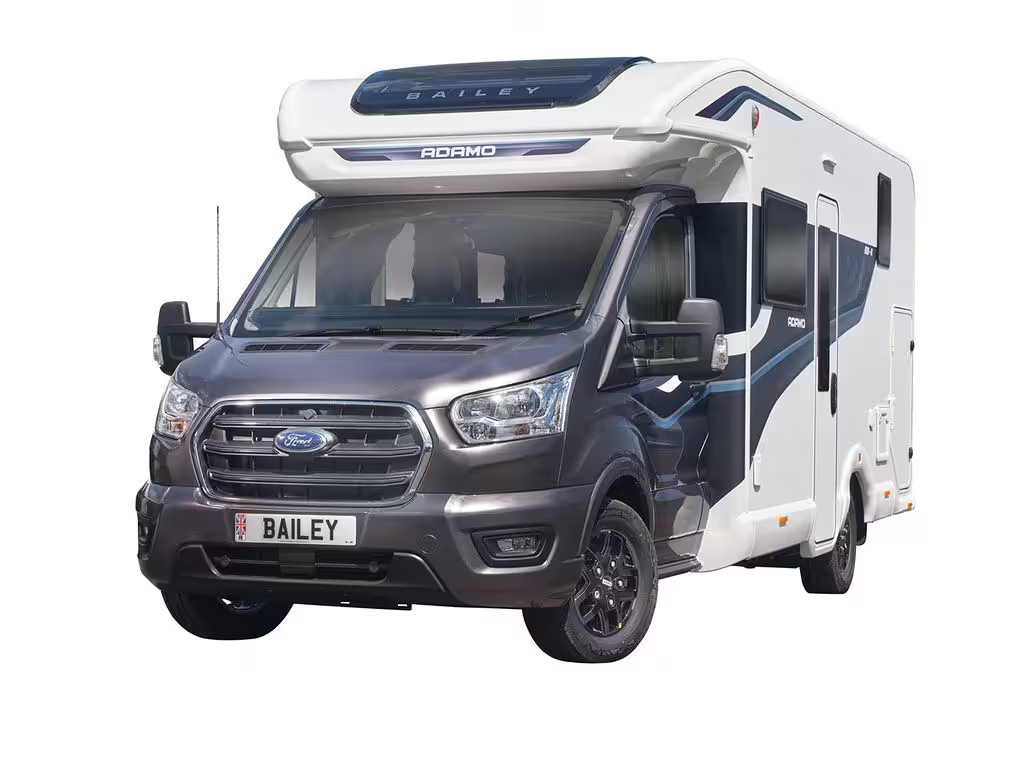
- Available To Order
- New
- 2027
- 4 Berth
- Coachbuilt
- End Washroom
- Automatic
Don Amott, Derbyshire£81,899£847 per month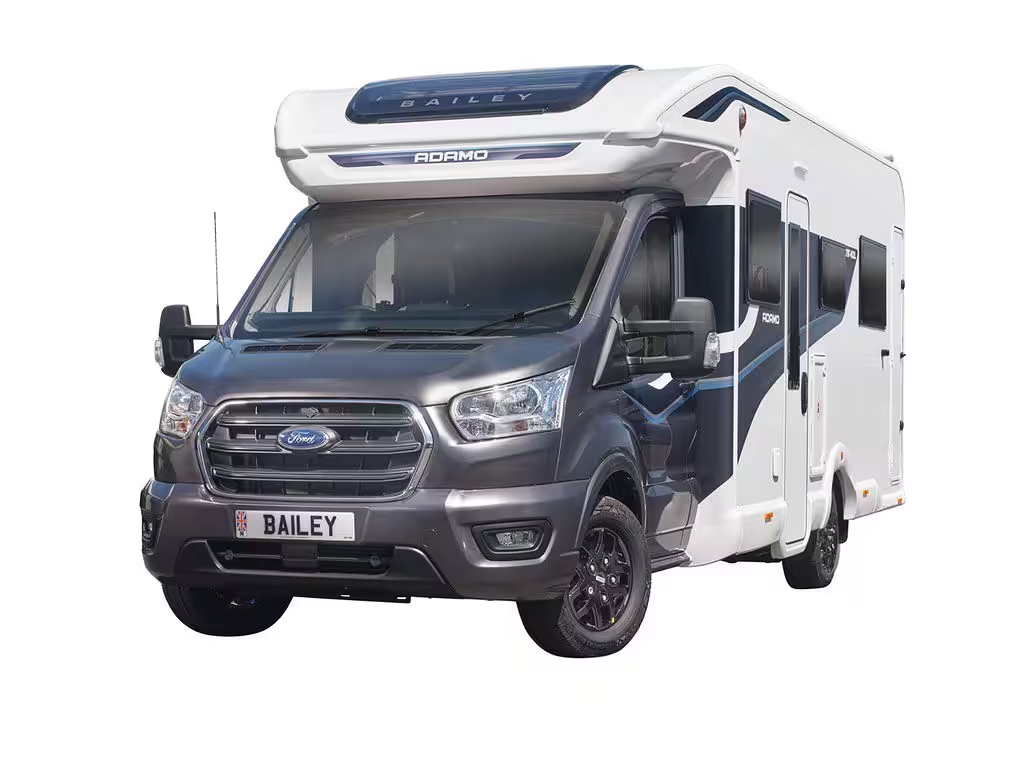
- Available To Order
- New
- 2027
- 4 Berth
- Coachbuilt
- End Lounge
- Drop-down Bed
- Automatic
Don Amott, Derbyshire£83,999£868 per month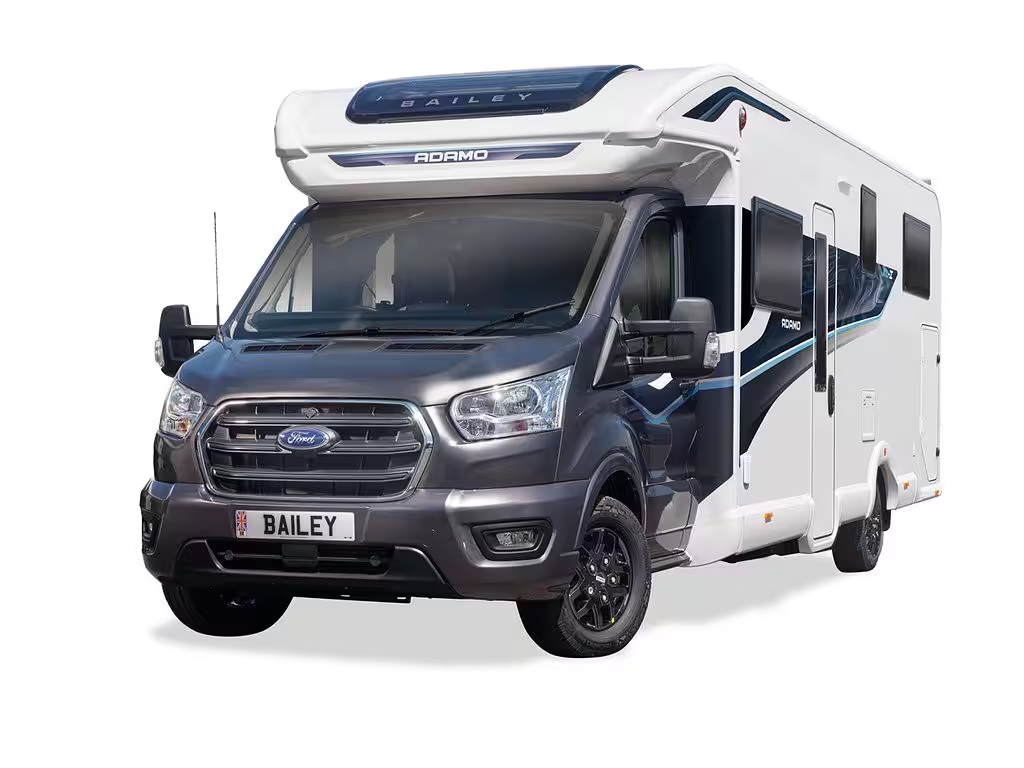
- Available To Order
- New
- 2027
- 4 Berth
- Coachbuilt
- Fixed Island Bed
- Automatic
Don Amott, Derbyshire£87,499£904 per month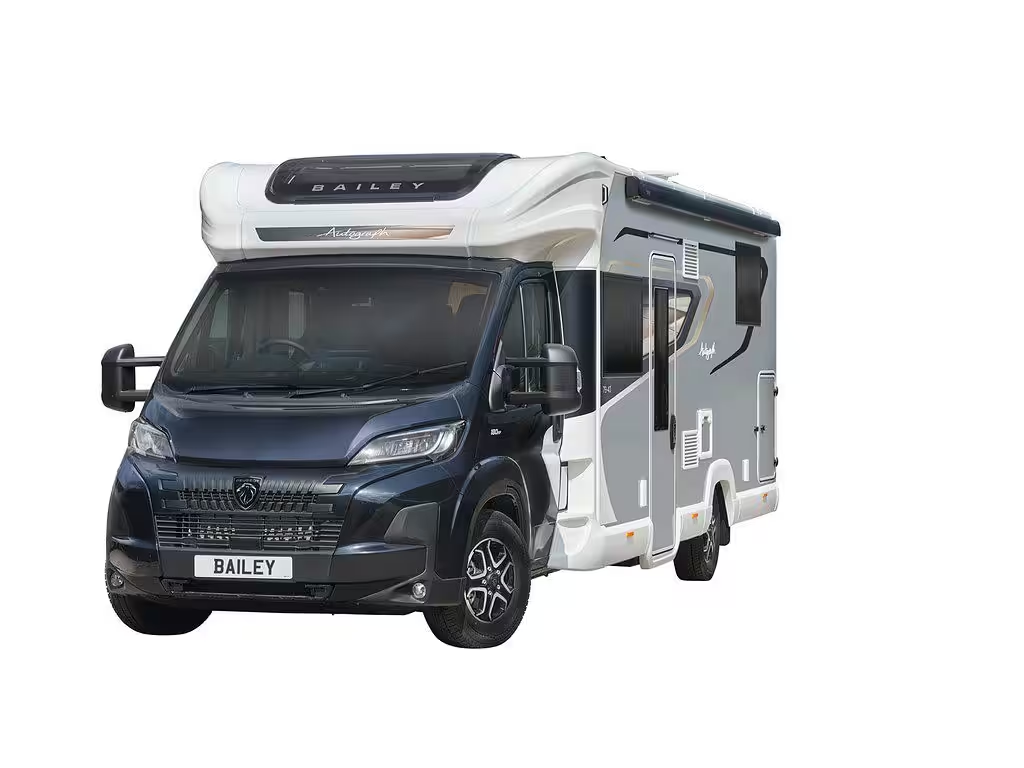
- Available To Order
- New
- 2027
- 4 Berth
- Coachbuilt
- Fixed Island Bed
- Automatic
Don Amott, Derbyshire£96,999£1,003 per monthNeed a hand? We're here to help, 7 days a weekDon Amott Caravans and Motorhomes
Leisure Kingdom, Egginton Road, Hilton, Derbyshire, United Kingdom, DE65 5FJ (Reg office)
 © 2023 - 2026 Don Amott Caravans and Motorhomes. All rights reserved.
Registered in England No. 4109948 | VAT No. 894 996 923
Don Amott is registered with the FCA, our registration number is 679752.
We will receive commission for introducing you to Black Horse Finance and we will tell you, in good time before the sale is completed, the amount of commission we will receive from Black Horse Finance. The amount of commission we receive does not affect the amount you pay to the lender under your credit agreement, as this is set by the lender.
Also trading at the Motorhome & Caravan Show, Birmingham.Designed and produced by KAL Group.