Coachbuilt Motorhome vs Panel Van Conversion: What’s the Difference?
4 minutes well spent
In this article
- How Each Motorhome Type Is Built
- Coachbuilt vs Panel Van Conversion Under 3,500kg
- Which Is Better for How You Travel?
- Coachbuilt vs Panel Van Conversion: Pros, Cons and Prices
- Which Don Amott Motorhomes Are Coachbuilt or Van Conversions?
- Coachbuilt or Panel Van Conversion: Which Should You Choose?
- Frequently Asked Questions
A coachbuilt motorhome has a purpose-built living body behind a chassis cab, while a panel van conversion fits accommodation inside the original van body. Neither is automatically better: the choice depends on how you travel. Both types are available at 3,500kg or less and may suit a standard Category B licence. Here are the two motorhome types explained.
How Each Motorhome Type Is Built
What is a coachbuilt motorhome?
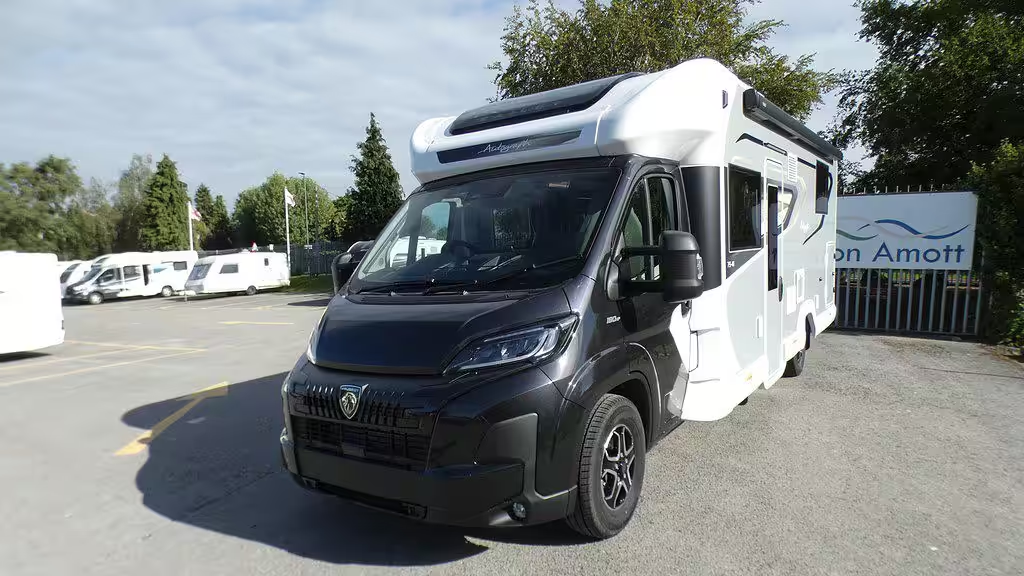
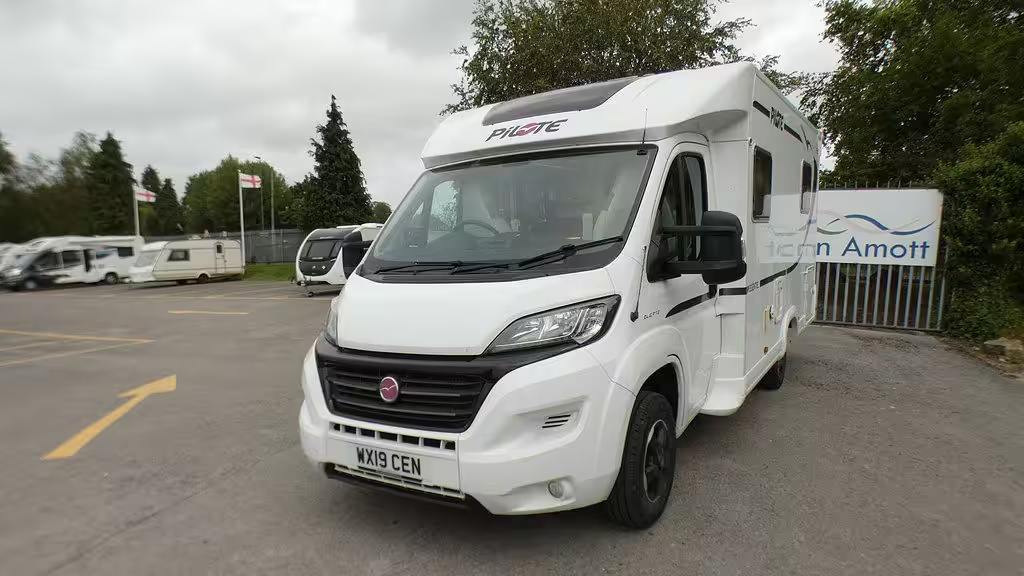
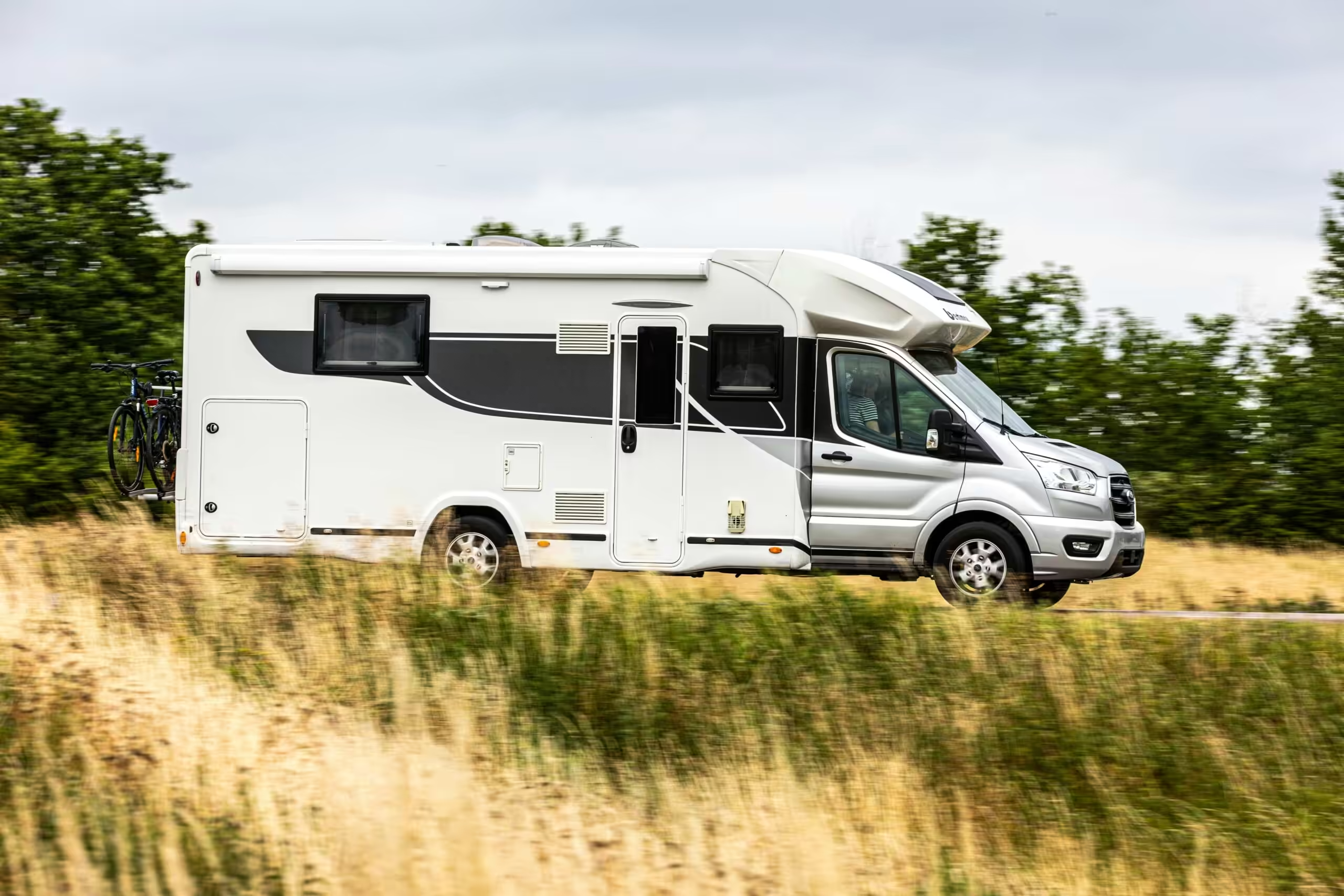
A coachbuilt begins with a chassis cab to which the manufacturer adds a habitation body. Straighter walls and greater width provide more freedom when designing lounges, washrooms, beds and garages. Insulation is also often stronger.
Low-profile and overcab models can both be coachbuilt. Not all are large, as compact models increasingly overlap with panel vans in size. Our motorhome layouts guide explains the available floorplans in more detail.
What is a panel van conversion?
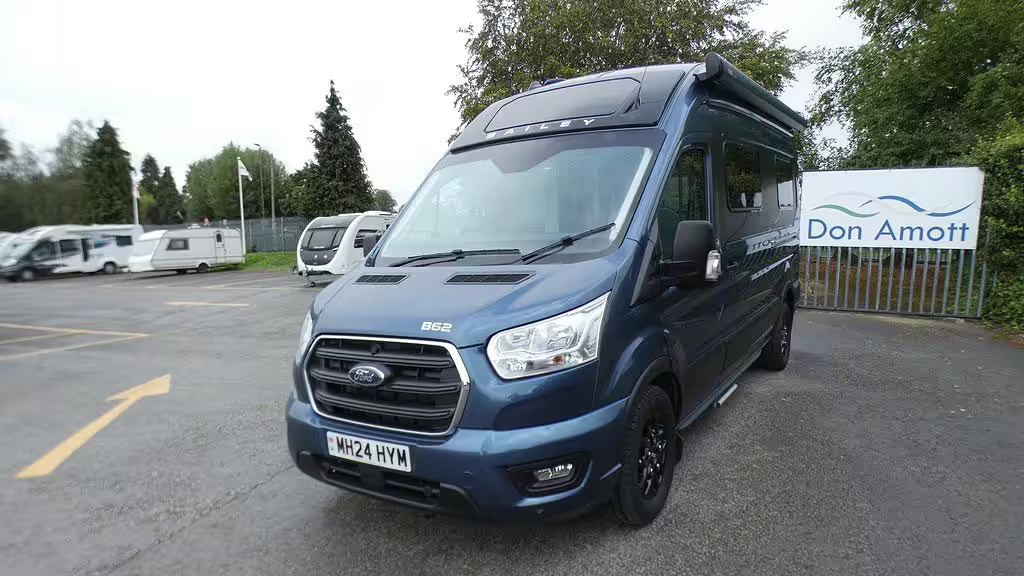
A panel van conversion keeps the commercial van body, including its sliding side and rear doors. The accommodation and services are fitted inside. It is typically narrower and more van-like to drive, but has less interior width than a similar-length coachbuilt.
Coachbuilt vs Panel Van Conversion Under 3,500kg
Body style does not determine licence entitlement; the vehicle’s plated Maximum Authorised Mass (MAM), also called MTPLM, does. Under current driving licence rules, Category B normally covers petrol, diesel and hybrid vehicles up to 3,500kg MAM.
Panel vans are commonly available below this limit, but are not automatically lighter. Compact coachbuilt motorhomes under 3,500kg are also available. Check each vehicle’s MTPLM, Mass in Running Order (MIRO) and payload.
Meeting the motorhome under 3,500kg licence limit is only half the calculation. You still need sufficient payload for passengers, water, bikes and equipment. A conventional motorhome above 3,500kg and up to 7,500kg would normally require Category C1.
For a closer look at licence limits, payload and the trade-offs between weight categories, read our guide to campervans under and over 3,500kg.
Which Is Better for How You Travel?
Panel van conversions for everyday use and active trips
The best campervan for everyday use will often prioritise manoeuvrability. A panel van’s narrower body can make towns, country roads, coastal routes and parking easier to manage. This versatility suits festivals, sports weekends, short breaks and spontaneous day trips. Depending on the layout, rear doors can also make loading bikes and outdoor kit easier.
A panel van conversion for wild camping or off-grid trips may include a lithium leisure battery. This can provide greater usable capacity and faster charging for fridges, lighting, laptops and devices. Panel vans do not inherently require lithium batteries; the specification reflects the intended use. Local overnight parking and camping restrictions still apply.
Coachbuilt motorhomes for longer trips
The best motorhome for touring over longer periods may place more value on living space. A coachbuilt motorhome for long trips can offer larger washrooms, permanent beds, greater storage and more separation between living areas. The purpose-built body can provide noticeably more room than a panel van of similar length, making it well suited to buyers who prioritise comfort over everyday versatility.
Coachbuilt vs Panel Van Conversion: Pros, Cons and Prices
| Factor | Coachbuilt | Panel van conversion |
| Interior space | Usually greater | More compact |
| Narrow roads | Wider models need more care | Generally easier |
| Everyday driving | More touring-focused | Often more versatile |
| Storage | Often more generous | More space-conscious |
| Under 3,500kg | Options available | Options available |
Panel van conversions are not necessarily cheaper. Integrating furniture and services into a shaped metal shell is complex, while higher-spec electrical systems add cost. Don Amott’s stock shows price overlap between both types. Compare the base vehicle, transmission, layout, equipment and whether it is new or used.
Which Don Amott Motorhomes Are Coachbuilt or Van Conversions?
Current panel van conversion examples include the Swift Carrera, Auto-Trail V-Line and Expedition, Elddis Autoquest CV and Bailey Endeavour. Coachbuilt examples include the Bailey Autograph and Adamo, Auto-Trail F-Line and Imala, and Elddis Whirlwind. Availability changes, and models within a range can have different layouts and weights.
Browse Don Amott’s new motorhomes and used motorhomes, or visit the Hilton dealership to compare driving position, width, living space, storage, beds, payload and electrical equipment side by side.
Coachbuilt or Panel Van Conversion: Which Should You Choose?
Consider a panel van conversion if manoeuvrability, short trips, outdoor activities and flexible everyday use matter most. Consider a coachbuilt if interior space, storage and comfort during longer stays are your priorities. If Category B compatibility matters, compare the individual vehicle’s MAM and payload rather than judging it by body type.
Frequently Asked Questions
What’s the main difference between a coachbuilt motorhome and a panel van conversion?
A coachbuilt has a purpose-built habitation body mounted behind a chassis cab. A panel van conversion retains the original van body and fits the accommodation inside it. Coachbuilts generally prioritise space, while panel vans prioritise compactness and manoeuvrability.
Which type is easier to keep under 3,500kg?
Panel vans are commonly available below 3,500kg, but many compact coachbuilts also meet this limit. The deciding factor is the vehicle’s MAM or MTPLM, not its body style. Always check the usable payload too.
Are panel van conversions better suited to wild camping, festivals and narrow roads?
Their narrower dimensions and van-like shape can make panel van conversions practical for narrow roads, festivals, short breaks and activity-focused trips. However, overnight parking and camping restrictions still apply, regardless of the vehicle’s size or type.
Why do panel van conversions often have lithium leisure batteries?
Adventure-focused panel vans are often designed for time away from electric hook-up. Lithium batteries can provide more usable energy and faster charging for fridges, lighting, devices and other equipment. However, the battery specification depends on the individual model and its intended use.
Is a coachbuilt motorhome better for longer touring?
Often, yes. The wider, purpose-built living area can provide more storage, larger washrooms, permanent beds and comfortable lounge space. This can make a coachbuilt better suited to extended trips, although a panel van may still be preferable if manoeuvrability is the greater priority.
We’ve got 100s of new and used stock for you to discover
The ultimate home of motorhomes, campervans & caravans sales in Derbyshire.
-
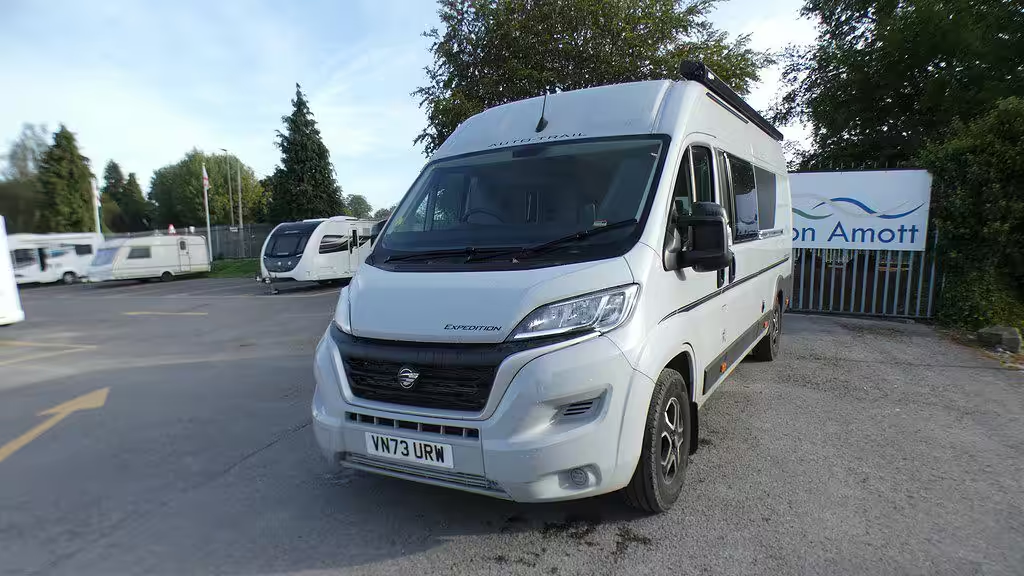
- Awaiting Preparation
- Used
- 2023
- 2 Berth
- Van Conversion
- 11,705 Miles
- End Bedroom
- Fixed Double Bed
- Automatic
Don Amott, Derbyshire£53,995£558 per month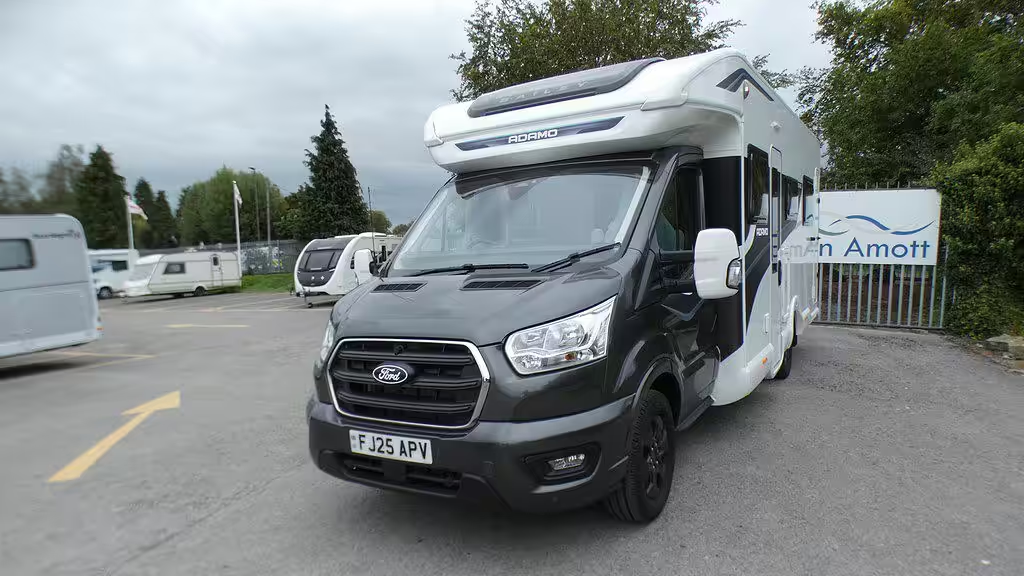
- Awaiting Preparation
- Used
- 2025
- 4 Berth
- Coachbuilt
- 2,226 Miles
- End Lounge
- Drop-down Bed
- Automatic
Don Amott, Derbyshire£66,995£692 per month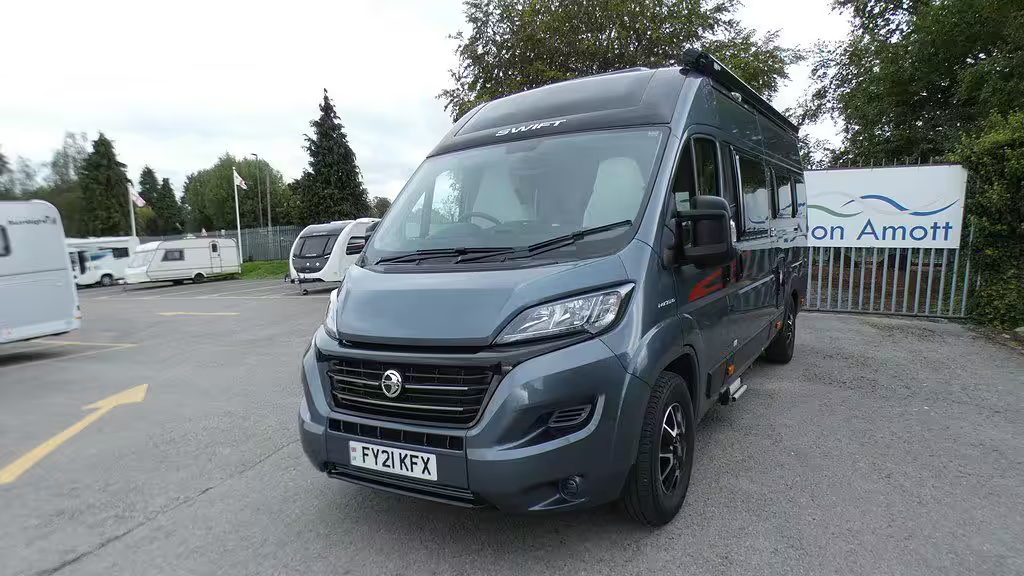
- Awaiting Preparation
- Used
- 2021
- 4 Berth
- Van Conversion
- 12,229 Miles
- End Lounge
- Manual
Don Amott, Derbyshire£53,995£558 per month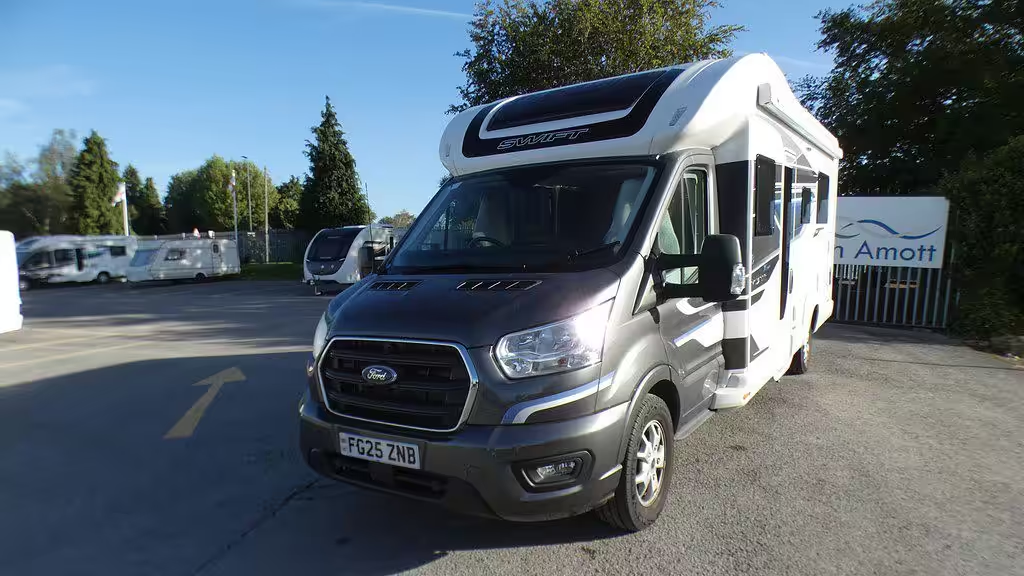
- Awaiting Preparation
- Used
- 2025
- 6 Berth
- Coachbuilt
- 3,924 Miles
- End Lounge
- Automatic
Don Amott, Derbyshire£63,995£661 per month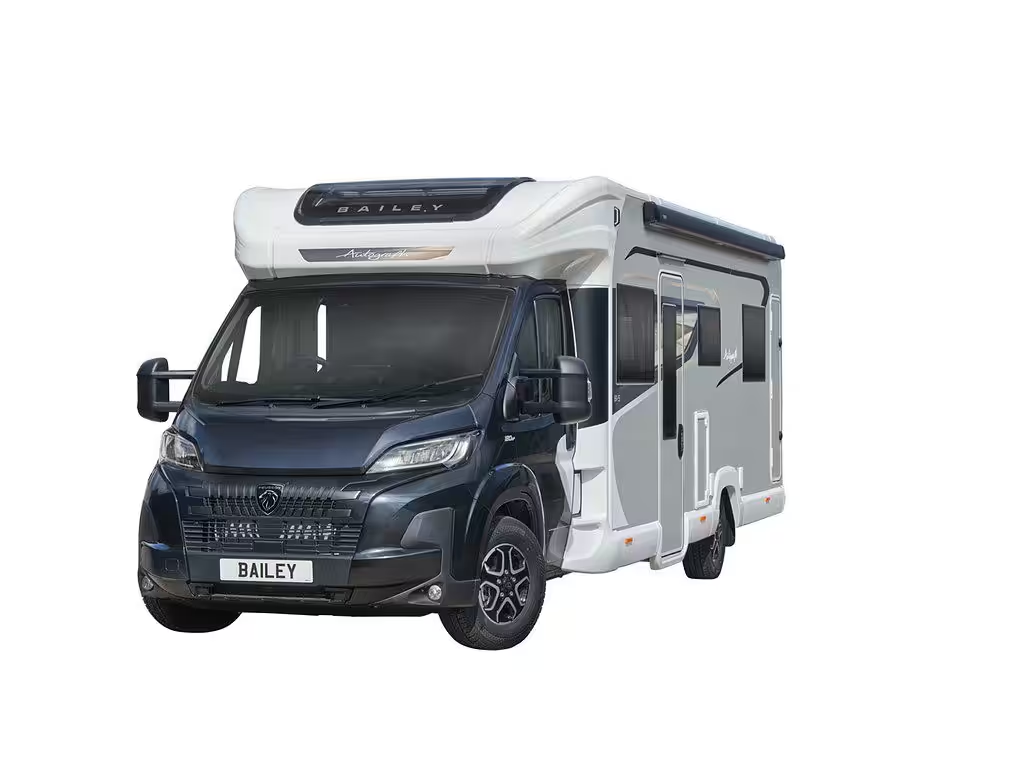
- Available To Order
- New
- 2027
- 6 Berth
- Coachbuilt
- End Lounge
- Drop-down Bed
- Automatic
Don Amott, Derbyshire£98,699£1,020 per month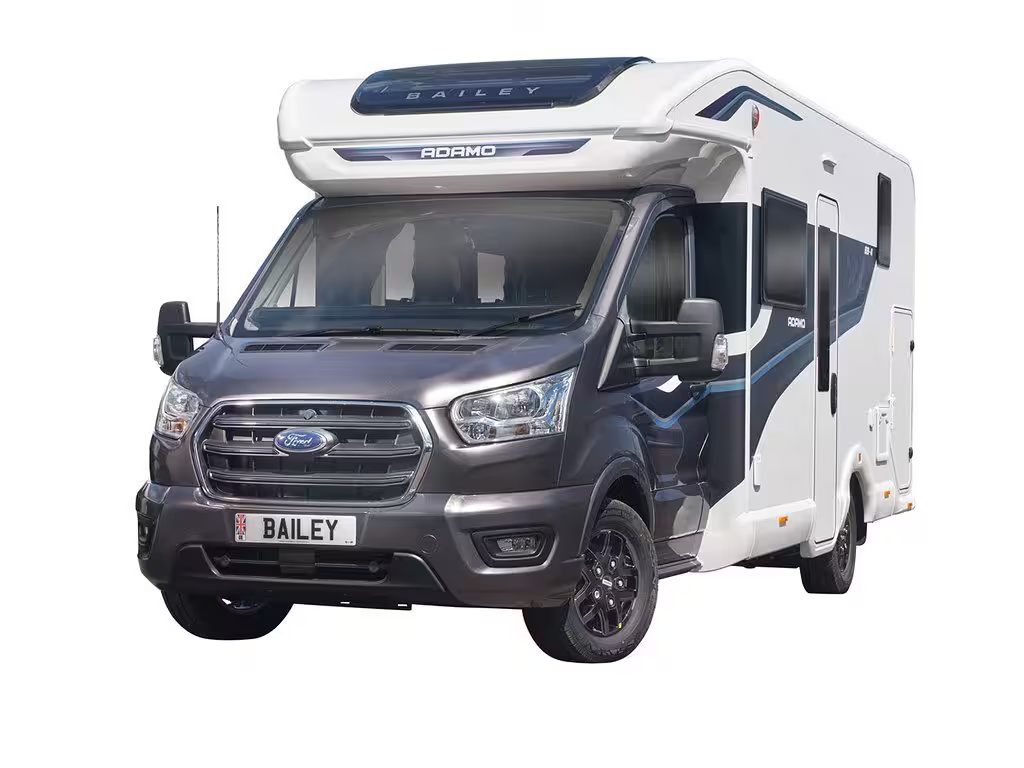
- Available To Order
- New
- 2027
- 4 Berth
- Coachbuilt
- End Washroom
- Automatic
Don Amott, Derbyshire£81,899£847 per month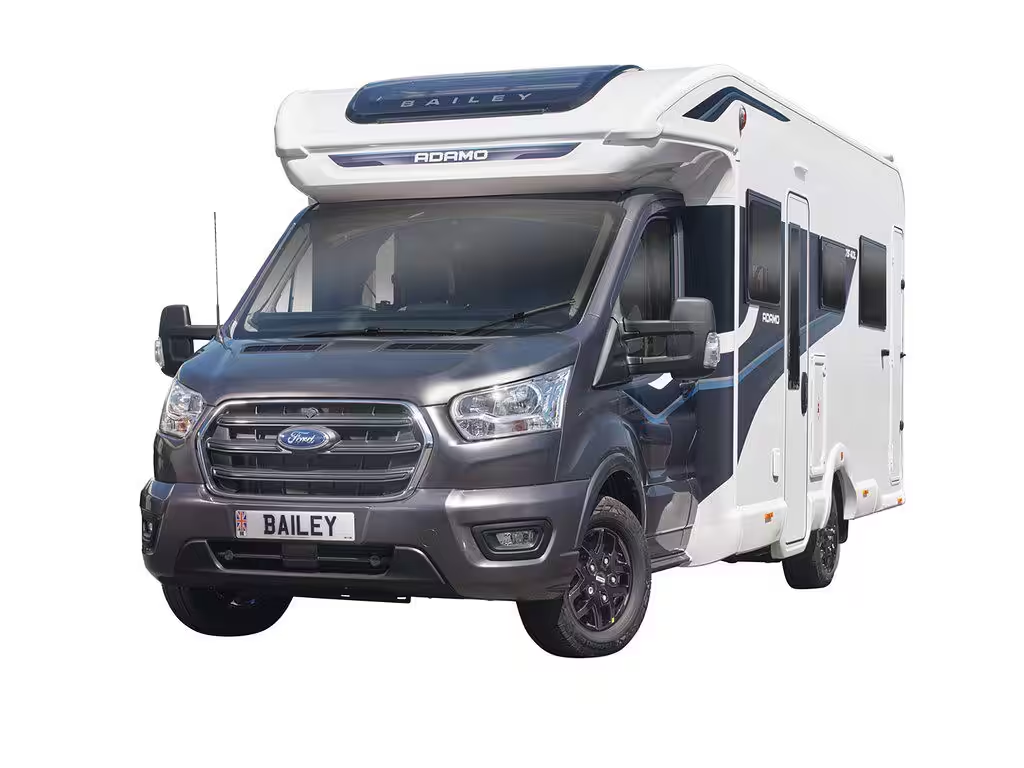
- Available To Order
- New
- 2027
- 4 Berth
- Coachbuilt
- End Lounge
- Drop-down Bed
- Automatic
Don Amott, Derbyshire£83,999£868 per month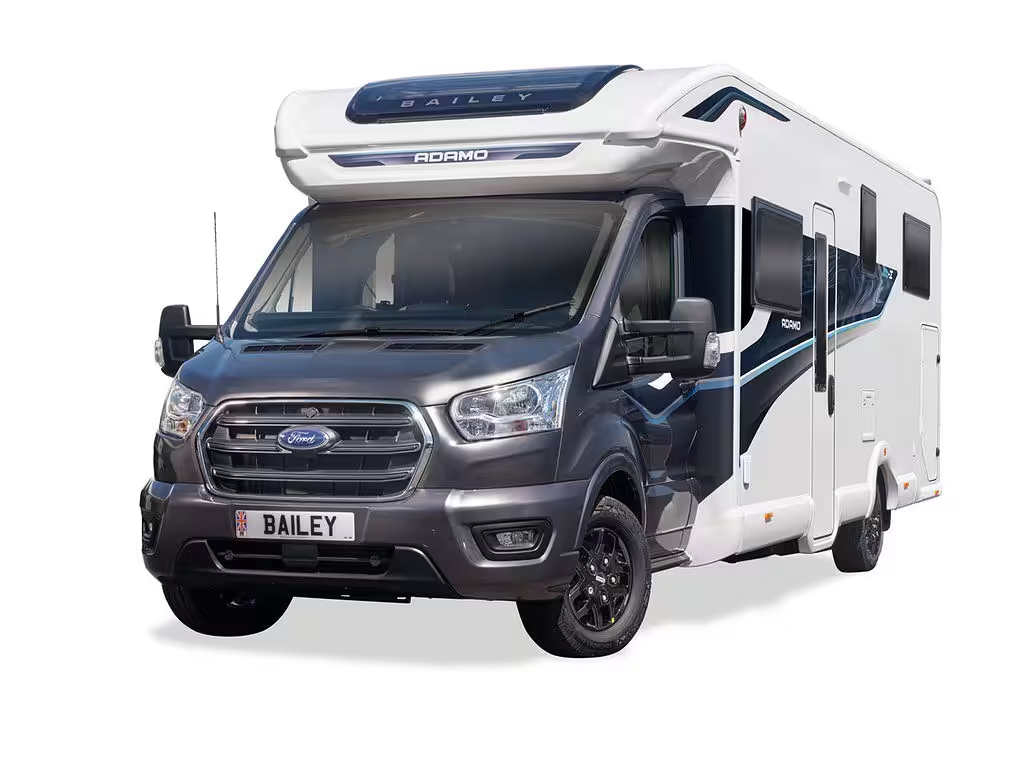
- Available To Order
- New
- 2027
- 4 Berth
- Coachbuilt
- Fixed Island Bed
- Automatic
Don Amott, Derbyshire£87,499£904 per month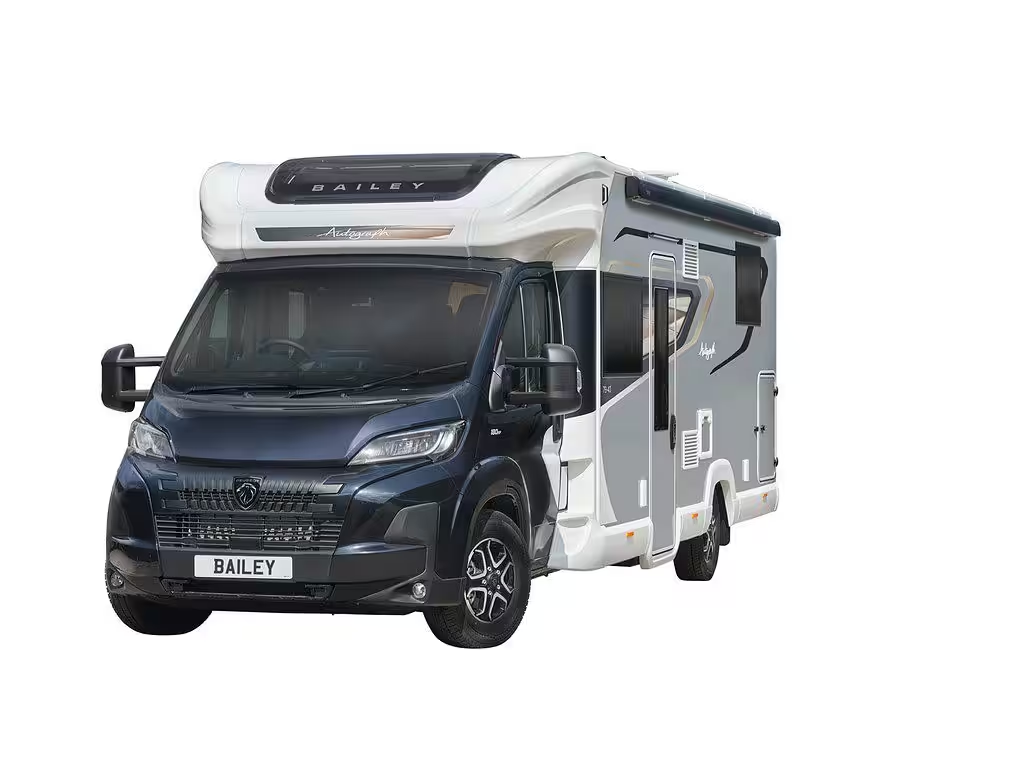
- Available To Order
- New
- 2027
- 4 Berth
- Coachbuilt
- Fixed Island Bed
- Automatic
Don Amott, Derbyshire£96,999£1,003 per monthNeed a hand? We're here to help, 7 days a weekDon Amott Caravans and Motorhomes
Leisure Kingdom, Egginton Road, Hilton, Derbyshire, United Kingdom, DE65 5FJ (Reg office)
 © 2023 - 2026 Don Amott Caravans and Motorhomes. All rights reserved.
Registered in England No. 4109948 | VAT No. 894 996 923
Don Amott is registered with the FCA, our registration number is 679752.
We will receive commission for introducing you to Black Horse Finance and we will tell you, in good time before the sale is completed, the amount of commission we will receive from Black Horse Finance. The amount of commission we receive does not affect the amount you pay to the lender under your credit agreement, as this is set by the lender.
Also trading at the Motorhome & Caravan Show, Birmingham.Designed and produced by KAL Group.