C1 Licence for Motorhomes: What You Need to Know in the UK (2026)
4 minutes well spent
In this article
- Quick Summary: C1 Licence Rules in the UK
- Real Example: Losing C1 Without Realising
- What Is a C1 Licence (And Why It Matters)
- Do You Need a C1 Licence for a Motorhome?
- Who Already Has a C1 Licence?
- Why C1 Licences Disappear After 70
- Can You Get Your C1 Licence Back After 70?
- How to Get a C1 Licence (Step-by-Step)
- Where Can You Take a C1 Licence Test?
- Do You Need Training for a C1 Licence?
- How Long Does a C1 Licence Last?
- Can You Drive a Motorhome While Waiting for Your C1?
- C1 vs Category C: What’s the Difference?
- Final Thought
Quick Summary: C1 Licence Rules in the UK
- You need a C1 licence to drive motorhomes over 3,500kg
- If you passed before 1997, you may already have C1 entitlement
- You must apply through the Driver and Vehicle Licensing Agency (DVLA) and take tests via the Driver and Vehicle Standards Agency (DVSA)
- A medical is required both for applying and renewing
- At age 70, C1 does not carry over automatically – it must be reapplied for
- Renewal is required every 5 years (under 70) and every 3 years after 70
Real Example: Losing C1 Without Realising
We recently spoke to a customer who assumed he could still drive a larger motorhome after turning 70, having previously driven minibuses for years. When he checked his licence, the C1 category had disappeared.
He assumed he would need to retake the test. In reality, he simply needed to complete a medical and reapply.
This situation is more common than people expect, and it often only becomes an issue when someone is ready to buy or insure a motorhome.
What Is a C1 Licence (And Why It Matters)
A C1 licence allows you to drive vehicles between 3,500kg and 7,500kg in Maximum Authorised Mass (MAM). This is the key threshold that separates standard motorhomes from larger, more spacious models.
For motorhome buyers, this isn’t just a legal detail – it directly affects what you can realistically choose. Motorhomes under 3,500kg can be driven on a standard licence, but once you move beyond that, a C1 licence becomes a requirement.
Larger motorhomes often offer:
- more internal space
- higher storage capacity
- more premium layouts and features
Understanding where this weight limit sits early on avoids wasted time looking at vehicles you may not be able to drive.
Do You Need a C1 Licence for a Motorhome?
The rule is simple:
If the motorhome exceeds 3,500kg MAM, you need a C1 licence.
You can find this figure:
- on the chassis plate
- in the vehicle specifications
- through your dealer
Even if a motorhome is only slightly over the limit, the requirement still applies. This is particularly relevant for larger coachbuilt and A-class motorhomes, which often exceed 3,500kg once fully equipped.
Who Already Has a C1 Licence?
Many drivers already have C1 entitlement without realising.
- If you passed your test before 1 January 1997 → you likely have C1 automatically
- If you passed after 1997 → you will need to apply and take the test
However, this entitlement is not guaranteed indefinitely, which is where confusion often begins.
Why C1 Licences Disappear After 70
At age 70, your driving licence must be renewed. During this process:
- Category B (standard car licence) is renewed automatically
- C1 is removed unless you actively reapply
This means many drivers only discover the issue when:
- checking their licence
- purchasing a motorhome
- arranging insurance
It is not an error – it is part of the standard renewal process.
Can You Get Your C1 Licence Back After 70?
Yes, in most cases.
If you previously held C1 entitlement, you will not usually need to retake the test.
Instead, you need to:
- reapply through the DVLA
- complete a medical assessment
- meet eyesight and health requirements
Once approved, your entitlement is reinstated and can be maintained through regular renewal.
How to Get a C1 Licence (Step-by-Step)
If you do not already hold C1 entitlement, the process involves several stages.
Step 1: Apply for Provisional C1
You’ll need:
- D2 application form
- D4 medical form
You can access both via GOV.UK:
https://www.gov.uk/dvlaforms
The medical includes:
- general health assessment
- vision test
Step 2: Pass the Theory Tests
You must complete:
- multiple-choice questions
- hazard perception
The content focuses on driving larger vehicles, including braking distances and safe positioning.
Step 3: Pass the Practical Test
The practical test assesses:
- vehicle control
- road awareness
- manoeuvring (including reversing)
- safety checks
This must be completed in a vehicle between 3,500kg and 7,500kg.
Where Can You Take a C1 Licence Test?
All C1 tests are carried out through the DVSA.
- Book via the UK website
- Attend an official DVSA test centre
- No private test alternatives exist
Test centres are located across the UK, although waiting times can vary depending on demand.
Do You Need Training for a C1 Licence?
Training is not mandatory, but most drivers take it.
Driving a motorhome over 3,500kg introduces:
- increased vehicle size
- reduced visibility
- longer stopping distances
Training helps you:
- adapt to the vehicle
- practise manoeuvres
- prepare for the test
Courses typically last 1–3 days and can significantly improve confidence and pass rates.
How Long Does a C1 Licence Last?
| Age | Renewal Requirement |
| Under 45 | Every 5 years |
| 45–69 | Every 5 years (with medical) |
| 70+ | Every 3 years (with medical) |
Medical checks are required at each renewal stage beyond standard licence conditions.
Can You Drive a Motorhome While Waiting for Your C1?
Only under specific conditions.
You must:
- have provisional C1 entitlement
- be supervised by a qualified driver
You cannot:
- drive independently
- test drive a motorhome over 3,500kg without the correct entitlement
C1 vs Category C: What’s the Difference?
| Licence | Weight Limit | Typical Use |
| Category B | Up to 3,500kg | Standard motorhomes |
| Category C1 | 3,500kg–7,500kg | Large motorhomes |
| Category C | Over 3,500kg | HGVs and commercial vehicles |
For most motorhome users, C1 is sufficient.
Should You Get a C1 Licence?
This comes down to how you plan to travel.
Reasons to get C1:
- access to larger motorhomes
- more storage and comfort
- better for long-term touring
Reasons to stay under 3,500kg:
- no additional licence requirements
- no medical renewals
- easier handling and manoeuvrability
For many buyers, this becomes the key decision point.
| Feature | Under 3,500kg | Over 3,500kg |
| Licence Required | Category B | C1 |
| Ease of Driving | Easier | Requires adjustment |
| Space & Layout | More compact | Larger, more spacious |
| Storage Capacity | Limited | Increased storage |
| Ideal For | Short trips, flexibility | Long-term touring, comfort |
| Licence Renewal | Standard renewal | Medical + renewal required |
Final Thought
The C1 licence is one of the most important – and often misunderstood – aspects of motorhome ownership in the UK. It determines not only what you can legally drive, but also the range of vehicles available to you.
Understanding how it works early allows you to make a clear, informed decision, whether that means moving into a larger motorhome or keeping things simple under 3,500kg.
No. This is a legal requirement regardless of how close the vehicle is to the limit.
Through the DVSA via the GOV.UK website.
Yes. A D4 medical form is required for both application and renewal.
Most commonly because it was not reapplied for when your licence was renewed at age 70.
In most cases, yes – a medical and reapplication are sufficient.
The overall cost varies depending on training and medical providers, but most drivers should expect to spend between £200 and £1,500 in total.
We’ve got 100s of new and used stock for you to discover
The ultimate home of motorhomes, campervans & caravans sales in Derbyshire.
-
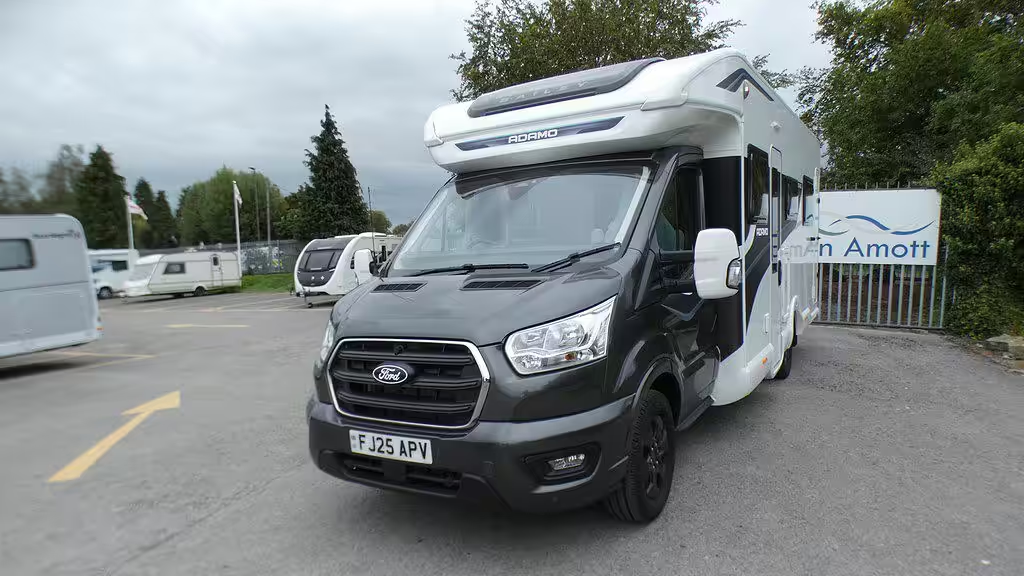
- Awaiting Preparation
- Used
- 2025
- 4 Berth
- Coachbuilt
- 2,226 Miles
- End Lounge
- Drop-down Bed
- Automatic
Don Amott, Derbyshire£66,995£692 per month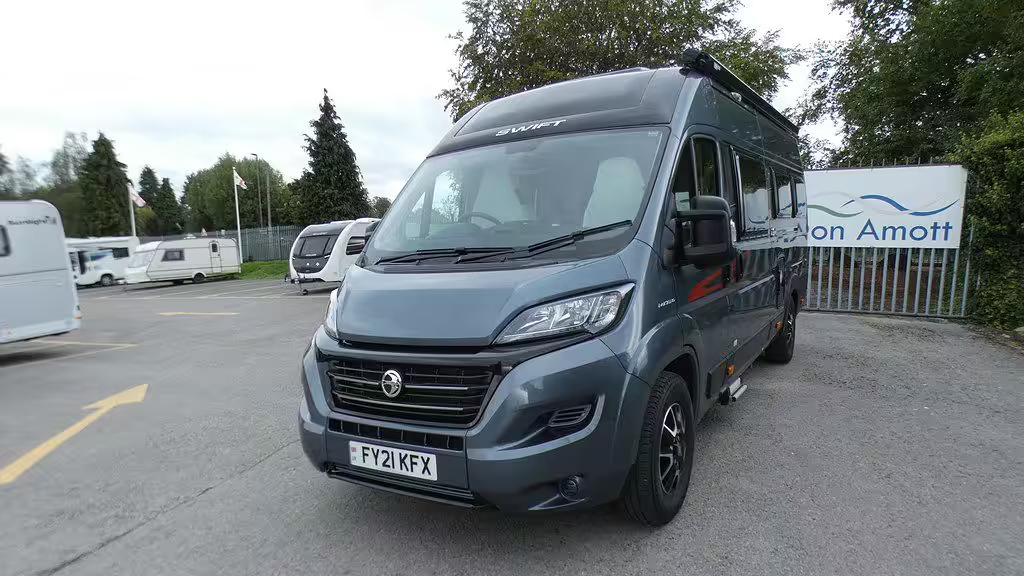
- Awaiting Preparation
- Used
- 2021
- 4 Berth
- Van Conversion
- 12,229 Miles
- End Lounge
- Manual
Don Amott, Derbyshire£53,995£558 per month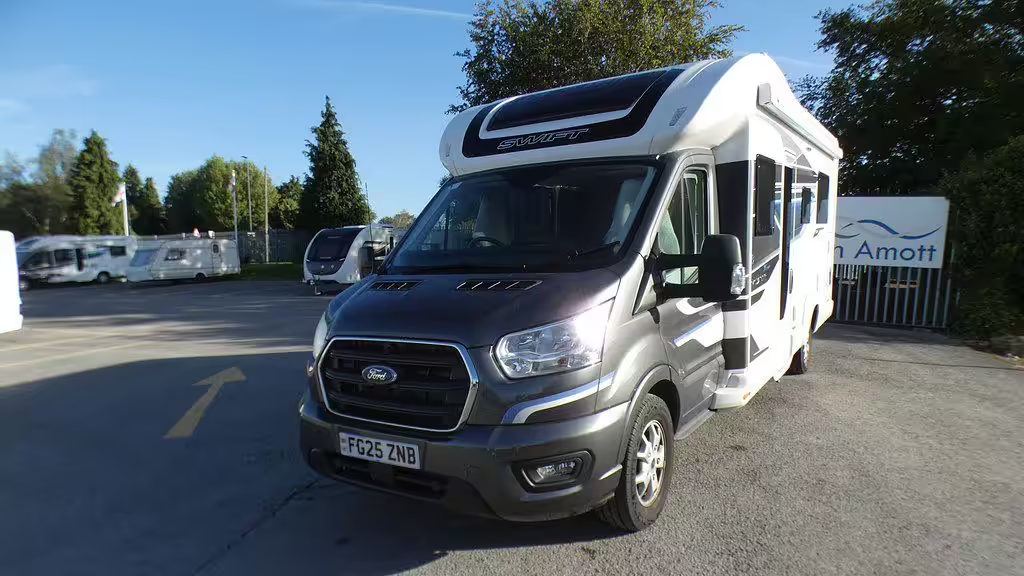
- Awaiting Preparation
- Used
- 2025
- 6 Berth
- Coachbuilt
- 3,924 Miles
- End Lounge
- Automatic
Don Amott, Derbyshire£63,995£661 per month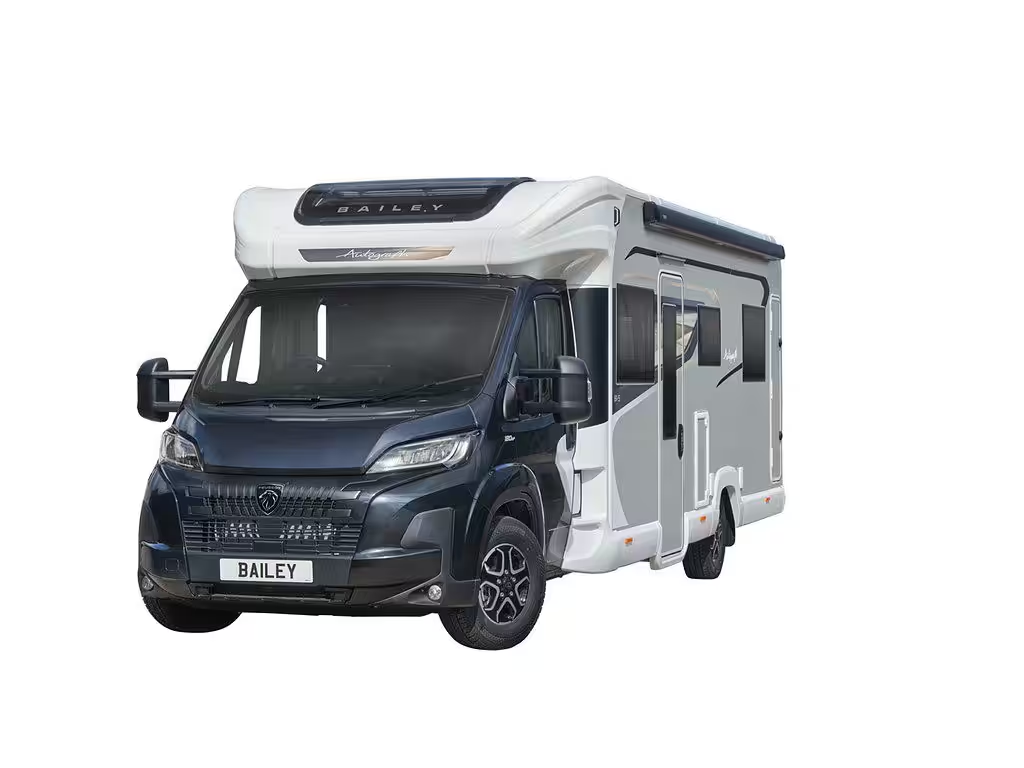
- Available To Order
- New
- 2027
- 6 Berth
- Coachbuilt
- End Lounge
- Drop-down Bed
- Automatic
Don Amott, Derbyshire£98,699£1,020 per month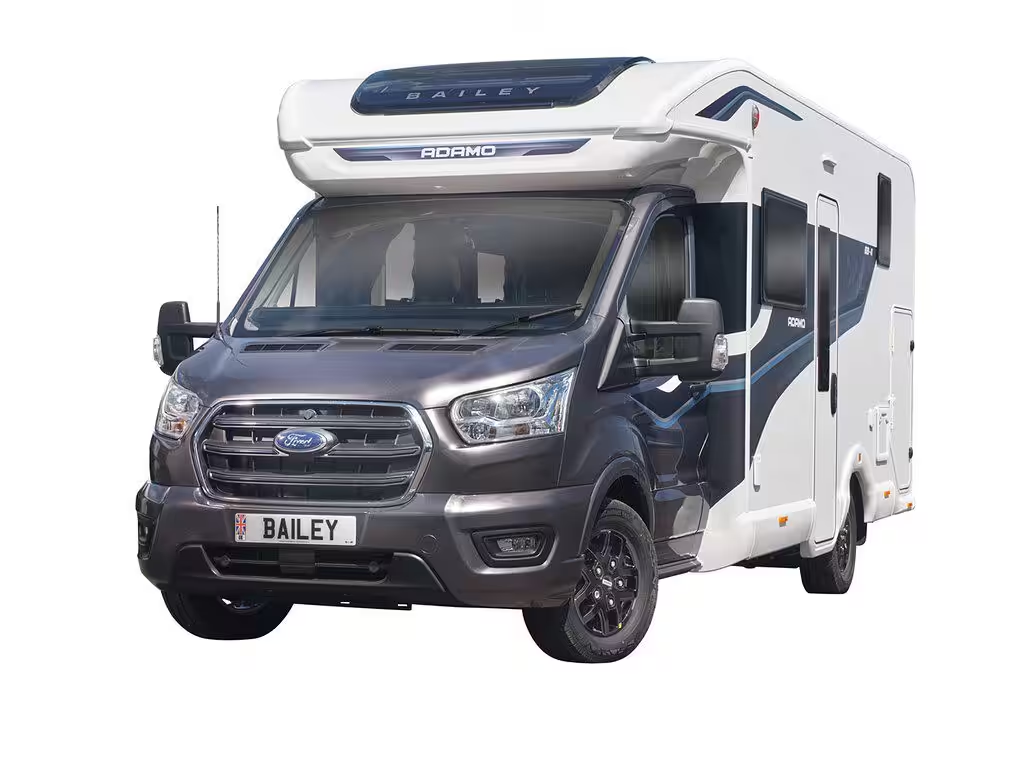
- Available To Order
- New
- 2027
- 4 Berth
- Coachbuilt
- End Washroom
- Automatic
Don Amott, Derbyshire£81,899£847 per month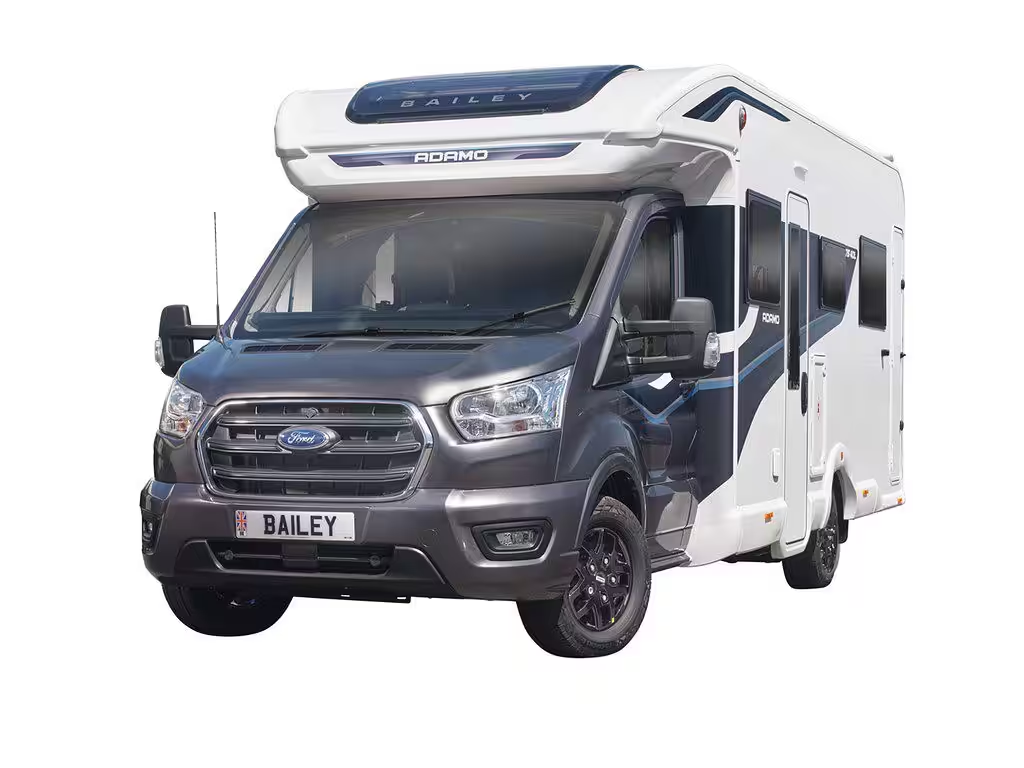
- Available To Order
- New
- 2027
- 4 Berth
- Coachbuilt
- End Lounge
- Drop-down Bed
- Automatic
Don Amott, Derbyshire£83,999£868 per month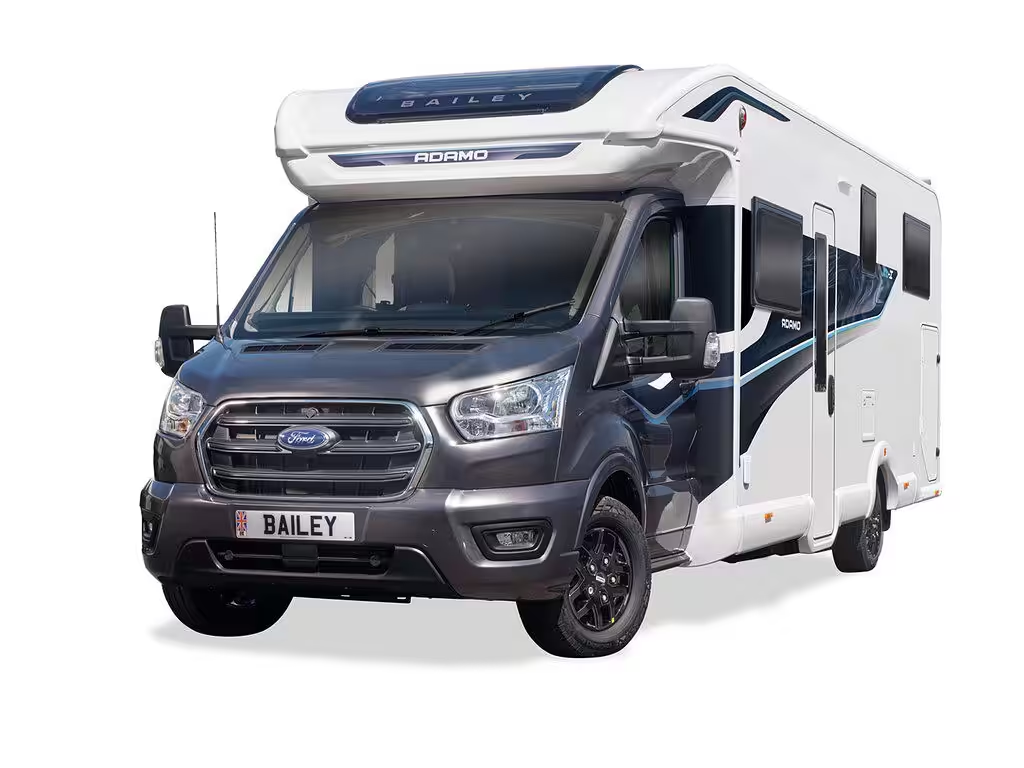
- Available To Order
- New
- 2027
- 4 Berth
- Coachbuilt
- Fixed Island Bed
- Automatic
Don Amott, Derbyshire£87,499£904 per month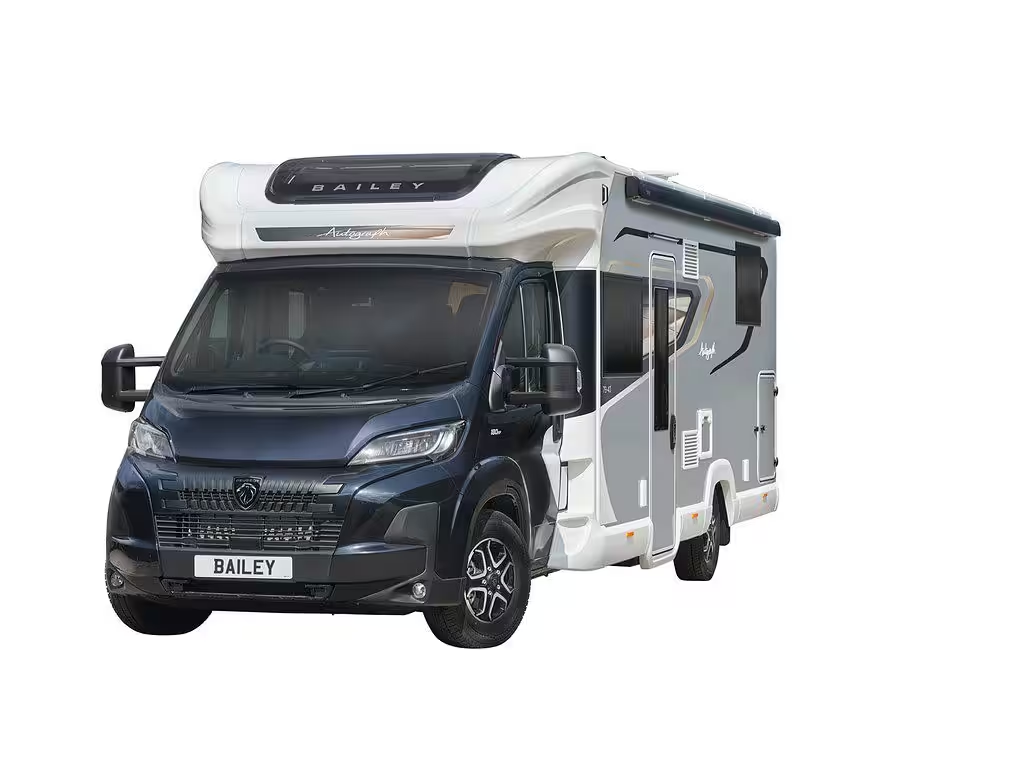
- Available To Order
- New
- 2027
- 4 Berth
- Coachbuilt
- Fixed Island Bed
- Automatic
Don Amott, Derbyshire£96,999£1,003 per month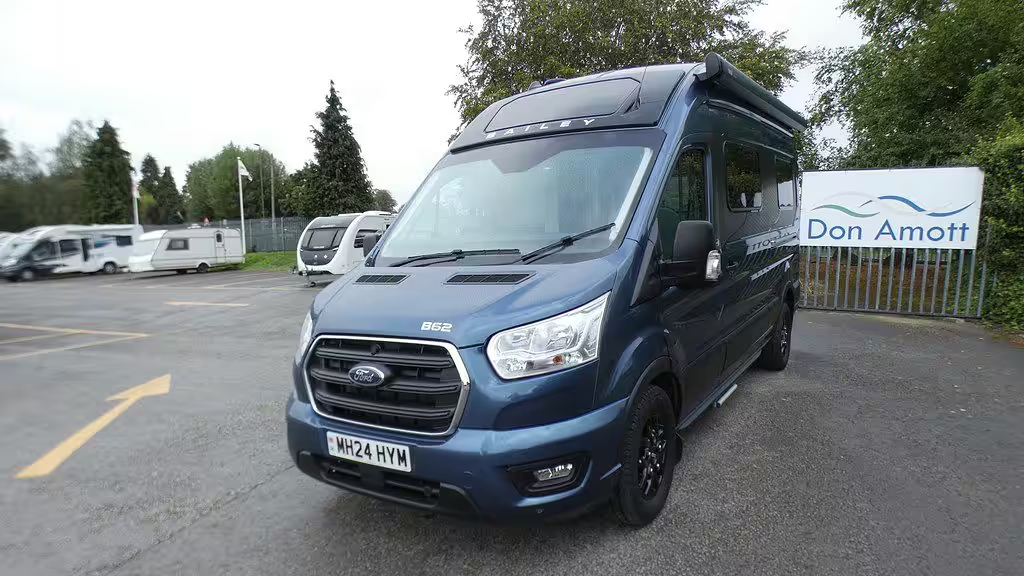
- Awaiting Preparation
- Used
- 2024
- 2 Berth
- Van Conversion
- 7,048 Miles
- End Lounge
- Automatic
Don Amott, Derbyshire£55,995£579 per monthNeed a hand? We're here to help, 7 days a weekDon Amott Caravans and Motorhomes
Leisure Kingdom, Egginton Road, Hilton, Derbyshire, United Kingdom, DE65 5FJ (Reg office)
 © 2023 - 2026 Don Amott Caravans and Motorhomes. All rights reserved.
Registered in England No. 4109948 | VAT No. 894 996 923
Don Amott is registered with the FCA, our registration number is 679752.
We will receive commission for introducing you to Black Horse Finance and we will tell you, in good time before the sale is completed, the amount of commission we will receive from Black Horse Finance. The amount of commission we receive does not affect the amount you pay to the lender under your credit agreement, as this is set by the lender.
Also trading at the Motorhome & Caravan Show, Birmingham.Designed and produced by KAL Group.